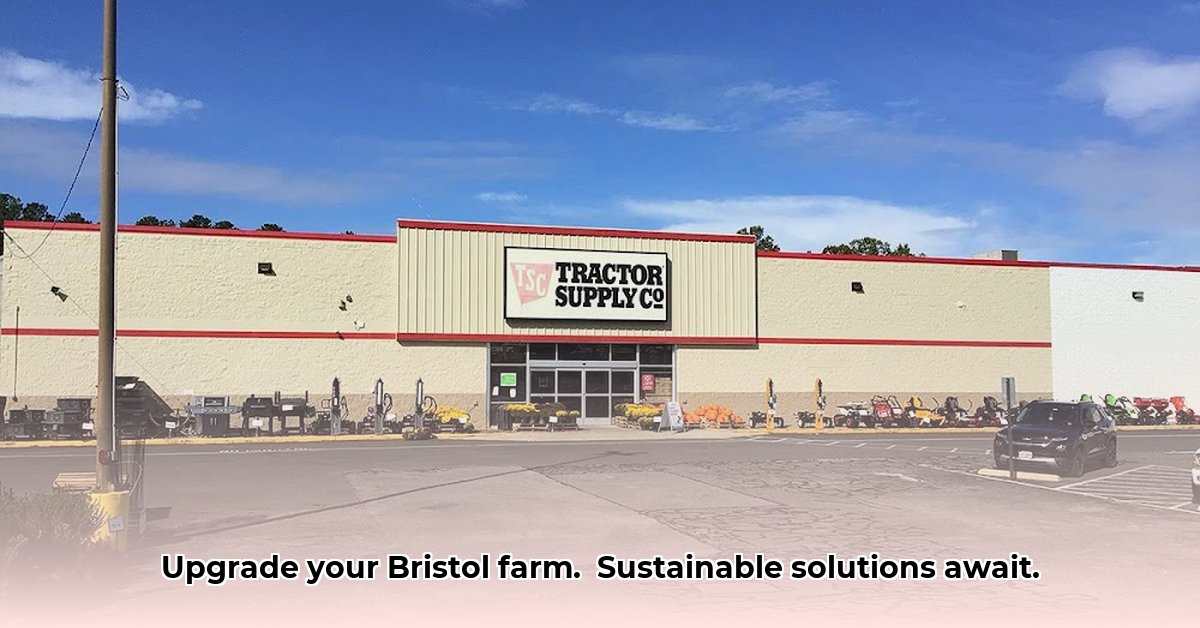
Tractor Supply Bristol, Virginia: Partnering for Sustainable Agriculture in Southwest Virginia
Farming in Southwest Virginia presents both significant opportunities and unique challenges. For local farmers committed to sustainable practices, access to appropriate resources is paramount. This article explores how Tractor Supply in Bristol, Virginia, can contribute to a more sustainable agricultural future in the region. We'll examine the opportunities and challenges, outline actionable steps for various stakeholders, and emphasize the importance of collaboration. For more information on Tractor Supply in Wise County, Virginia, please visit this helpful resource.
Understanding the Landscape: Opportunities and Challenges
Tractor Supply's Bristol store offers potential access to resources for sustainable farming. However, several key questions need answering: Does the store currently stock the specific products and services needed for sustainable farming transitions? Are local farmers aware of these resources? Bridging this communication gap is crucial. The store's convenient location is advantageous, but the availability of relevant products is equally important. For instance, does Tractor Supply Bristol offer organic seeds, tools, and equipment designed for low-impact farming? A complete inventory analysis is needed to accurately assess its capacity to bolster sustainable agriculture practices.
Taking Action: A Roadmap to Sustainable Success
Real progress in sustainable farming requires coordinated efforts from all involved. The following steps outline crucial actions for various stakeholder groups:
1. Local Farmers:
- Inventory Review: Thoroughly examine Tractor Supply Bristol's catalog, identifying products aligning with individual sustainability goals (e.g., organic fertilizers, energy-efficient irrigation).
- Feedback is Key: Communicate unmet needs directly to Tractor Supply Bristol. Suggest missing products or services to influence future inventory decisions.
- Network and Share: Collaborate with fellow farmers, exchanging insights and experiences regarding sustainable farming practices and Tractor Supply's offerings.
- Explore Alternatives: Supplement Tractor Supply resources with products from other local suppliers or online retailers if necessary.
2. Tractor Supply Bristol:
- Market Research: Conduct thorough market research—surveys, interviews, focus groups—to identify specific farmer needs concerning sustainable agriculture.
- Targeted Marketing: Develop marketing campaigns highlighting how products support sustainable farming methods. Emphasize concrete examples of product benefits.
- Strategic Partnerships: Collaborate with suppliers committed to sustainable practices, aligning business values with environmentally responsible choices.
- Transparency: Clearly communicate your sustainability initiatives to foster trust among customers concerned about environmental stewardship.
3. Regional Agricultural Extension Services:
- Joint Initiatives: Partner with Tractor Supply Bristol to host workshops and training sessions focusing on practical sustainable farming techniques.
- Curriculum Updates: Integrate information about Tractor Supply's sustainable product offerings into training programs and educational materials.
- Collaborative Promotion: Collaborate on marketing campaigns promoting sustainable agriculture initiatives within the region.
4. Environmental Non-Governmental Organizations (NGOs):
- Impact Assessment: Conduct a comprehensive assessment of Tractor Supply Bristol's environmental impact, considering factors such as transportation methods and supply chain practices.
- Sustainable Sourcing: Actively work with Tractor Supply Bristol to promote and support more eco-friendly supply chain practices.
- Success Stories: Highlight successes in sustainable agriculture, emphasizing Tractor Supply Bristol's role in supporting local farmer efforts.
Stakeholder Actions: A Collaborative Framework
The following table summarizes short-term (0-1 year) and long-term (3-5 years) actions needed from each stakeholder for a thriving, sustainable agricultural landscape:
| Stakeholder | Short-Term Actions (0-1 Year) | Long-Term Actions (3-5 Years) |
|---|---|---|
| Local Farmers | Evaluate Tractor Supply’s offerings; Communicate unmet needs. | Advocate for expanded sustainable product lines; Share best practices. |
| Tractor Supply Bristol | Conduct market research; Develop targeted marketing campaigns. | Expand sustainable product offerings; Strengthen supplier relationships committed to sustainability. |
| Regional Ag Extensions | Partner on workshops and training; Integrate Tractor Supply resources. | Fully integrate Tractor Supply into regional sustainability initiatives. |
| Environmental NGOs | Assess environmental impacts; Advocate for sustainable sourcing. | Collaborate on supply chain improvements; Promote wider environmental awareness. |
Assessing Tractor Supply's Impact on Sustainable Farming
This section outlines a framework for evaluating Tractor Supply's contribution to sustainable agriculture in Southwest Virginia. It considers both environmental and social aspects, and highlights the crucial role played by various stakeholders.
Measuring TSC's Environmental Footprint
Assessing Tractor Supply's environmental impact requires a detailed review of their progress toward stated goals in areas such as emissions reduction and water conservation. Examining the transparency and methodology of their reporting, and seeking independent verification of claims, are crucial for a comprehensive evaluation. This granular analysis provides a clear picture of their environmental stewardship within the region.
The Social Impact
Evaluating Tractor Supply's social impact focuses on their commitment to diversity, equity, and inclusion (DEI). Analyzing their progress in DEI within Southwest Virginia paints a broader picture of their sustainability contributions, considering the societal impact beyond environmental concerns.
Stakeholder Perspectives: A Multifaceted Approach
Effective assessment demands considering the perspectives of multiple stakeholders and their actions:
| Stakeholder | Short-Term Actions (0-1 years) | Long-Term Actions (3-5 years) |
|---|---|---|
| Tractor Supply | Track progress toward sustainability goals; refine DEI programs | Implement strategies to achieve long-term environmental goals |
| Farmers | Evaluate TSC’s product offerings for sustainability; adopt best practices | Invest in sustainable farming technology; explore alternative supply chains |
| Investors | Assess ESG performance; evaluate long-term risk mitigation | Analyze long-term financial impacts of sustainability initiatives |
| Consumers | Evaluate the company’s sustainability practices when purchasing | Support the company's efforts through conscious consumer choices |
| Suppliers | Collaborate on emission reductions and sustainable practices | Partner with TSC on long-term sustainable supply-chain solutions |
A Call to Collaboration
Assessing Tractor Supply's impact is an ongoing process requiring continuous monitoring and evaluation. Collaboration among Tractor Supply, local farmers, researchers, and policymakers is essential for building a sustainable agricultural future in Southwest Virginia. Continued open communication and concerted effort are key to achieving long-term sustainability goals.